Why Armenian Pronunciation Feels Difficult — and How to Improve It

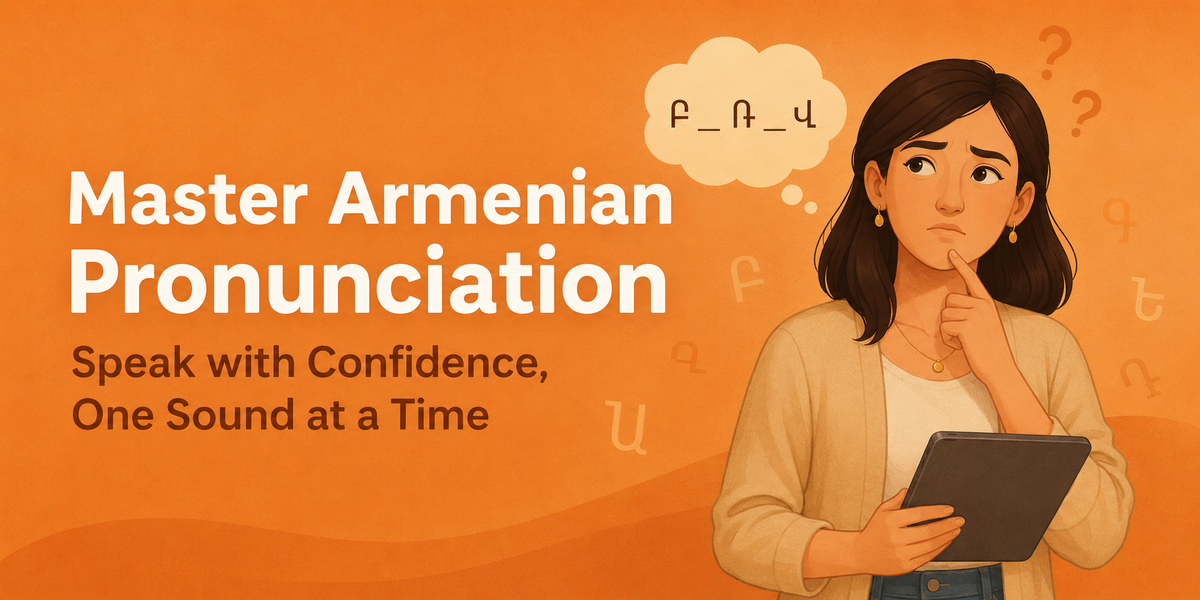
Learning Armenian can feel exciting at first. You begin with familiar words such as barev, shnorhakalutyun, and inchpes es. But as soon as you start speaking in full sentences, pronunciation can become one of the biggest challenges.
The good news is that Armenian pronunciation becomes much easier when you practise it step by step.
Why Is Armenian Pronunciation Challenging?
Armenian contains several sounds that may not exist in English, French, German, Russian, or other languages.
Some letters may appear similar but produce noticeably different sounds. Armenian also distinguishes between certain soft, strong, aspirated, and unaspirated consonants. These differences can change how natural your speech sounds and, in some cases, may even change the meaning of a word.
Another challenge is that learners often try to read Armenian words using the pronunciation rules of languages they already know. This is completely normal, but it can create habits that become difficult to correct later.
Learn the Alphabet Before Memorising Too Many Phrases
It may be tempting to learn Armenian only through transliteration, using Latin letters instead of the Armenian alphabet. Transliteration can be helpful in the beginning, but relying on it for too long can slow down your progress.
Learning the Armenian alphabet allows you to:
- recognise the correct pronunciation of words;
- read signs, menus, messages, and names;
- understand the difference between similar sounds;
- develop stronger listening and speaking skills.
You do not need to memorise the entire alphabet in one day. Learning a few letters at a time is usually more effective.
Listen Before You Speak
Pronunciation improves through careful listening.
Before repeating a new Armenian word, listen to it several times. Pay attention to the rhythm, stress, and individual sounds. Then repeat it slowly before trying to say it at normal speed.
Recording yourself can also be extremely useful. Your pronunciation may sound different in your head than it does in a recording. Comparing your voice with the original audio helps you notice which sounds need more practice.
Practise Complete Sentences
Individual words are important, but real conversations happen through sentences.
Instead of learning only the word ջուր (jur, meaning “water”), practise a complete sentence such as:
Կարո՞ղ եմ ջուր խնդրել։
“Can I ask for some water?”
This helps you practise pronunciation, grammar, rhythm, and real-life communication at the same time.
Do Not Be Afraid of Mistakes
Many learners avoid speaking because they are worried about making pronunciation mistakes. However, mistakes are a necessary part of language learning.
You do not need a perfect Armenian accent to communicate successfully. Your first goal should be to speak clearly and confidently. With regular listening and repetition, your pronunciation will gradually become more natural.
How Haylingua Helps You Practise
Haylingua is designed to help learners build Armenian skills progressively.
Through interactive exercises, learners can practise:
- Armenian letters and sounds;
- word recognition;
- listening comprehension;
- pronunciation;
- reading;
- vocabulary;
- practical conversations.
Instead of simply memorising word lists, you learn how Armenian is used in realistic situations. Short lessons, gamification, progress tracking, and regular practice make it easier to stay motivated.
Start Speaking Armenian Today
You do not need to master every Armenian sound before beginning a conversation.
Start with a few letters, listen carefully, repeat simple phrases, and practise consistently. Even ten minutes of focused learning each day can create noticeable progress over time.
Haylingua is here to make that journey easier, more interactive, and more enjoyable.
Start learning Armenian at haylingua.am.