Armenian Verbs: 25 Most Common Verbs for Beginners
The 25 most common Armenian verbs for beginners, with simple example sentences, a quick guide to -el and -al infinitives, and how to use them in the present tense.

Once you know a handful of Armenian verbs and one simple pattern for using them, you can say what you want, what you are doing and what you don't understand.
Below are 25 of the most common Armenian verbs for beginners, grouped by use, each with a short example sentence you can borrow straight away.
How Armenian verbs work
The dictionary form of an Armenian verb, the infinitive, ends in either -ել (-el) or -ալ (-al). For example, խոսել (khosel) – to speak, and կարդալ (kardal) – to read.
To talk about the present, you do two things:
- Drop -el or -al and add -ում (-um). So khosel becomes խոսում (khosum) and kardal becomes կարդում (kardum).
- Add the right form of "to be": եմ (em), ես (es), է (e), ենք (enk), եք (ek), են (en).
So Ես խոսում եմ։ (yes khosum em) means both "I speak" and "I am speaking". To make it negative, use չեմ (chem) before the verb: Ես չեմ խոսում։ (yes chem khosum) – I don't speak. The negative for he or she is չի (chi).
Everyday essentials
- լինել (linel) – to be. Ես ուսանող եմ։ (yes usanogh em) – I am a student.
- ունենալ (unenal) – to have. Ես եղբայր ունեմ։ (yes yeghbayr unem) – I have a brother.
- անել (anel) – to do, to make. Ի՞նչ ես անում։ (inch es anum?) – What are you doing?
- գնալ (gnal) – to go. Ես տուն եմ գնում։ (yes tun em gnum) – I am going home.
- գալ (gal) – to come. Նա վաղը գալիս է։ (na vaghə galis e) – He is coming tomorrow.
- ուզել (uzel) – to want. Ես ջուր եմ ուզում։ (yes jur em uzum) – I want water.
- սիրել (sirel) – to love, to like. Նա սուրճ չի սիրում։ (na surch chi sirum) – She doesn't like coffee.
Three of these are a little irregular. Linel in the present is just the "to be" word on its own. Unenal becomes ունեմ (unem) – I have, without -um. And gal uses գալիս (galis) instead of -um.
Daily life verbs
- ուտել (utel) – to eat. Մենք հաց ենք ուտում։ (menk hats enk utum) – We are having a meal (literally, eating bread).
- խմել (khmel) – to drink. Ես սուրճ եմ խմում։ (yes surch em khmum) – I am drinking coffee.
- ապրել (aprel) – to live. Ես Երևանում եմ ապրում։ (yes Yerevanum em aprum) – I live in Yerevan.
- աշխատել (ashkhatel) – to work. Որտե՞ղ ես աշխատում։ (vortegh es ashkhatum?) – Where do you work?
- քնել (knel) – to sleep. Երեխան քնում է։ (yerekhan knum e) – The child is sleeping.
- գնել (gnel) – to buy. Ես հաց եմ գնում։ (yes hats em gnum) – I am buying bread.
- սպասել (spasel) – to wait. Ես քեզ եմ սպասում։ (yes kez em spasum) – I am waiting for you.
- օգնել (ognel) – to help. Կարո՞ղ եք ինձ օգնել։ (karogh ek indz ognel?) – Can you help me?
A small trap: gnal (to go) and gnel (to buy) both become գնում (gnum) in the present. Ես հաց եմ գնում is "I am buying bread", while Ես տուն եմ գնում is "I am going home". Context tells you which.
Verbs for talking and understanding
- խոսել (khosel) – to speak. Անգլերեն խոսո՞ւմ եք։ (angleren khosum ek?) – Do you speak English?
- ասել (asel) – to say. Հայերեն ինչպե՞ս են ասում «thank you»։ (hayeren inchpes en asum “thank you”?) – How do you say “thank you” in Armenian?
- տեսնել (tesnel) – to see. Ես քեզ չեմ տեսնում։ (yes kez chem tesnum) – I can't see you.
- լսել (lsel) – to hear, to listen. Ես երաժշտություն եմ լսում։ (yes yerazhshtutyun em lsum) – I am listening to music.
- հասկանալ (haskanal) – to understand. Ես չեմ հասկանում։ (yes chem haskanum) – I don't understand.
- գիտենալ (gitenal) – to know. Ես չգիտեմ։ (yes chgitem) – I don't know.
- հիշել (hishel) – to remember. Ես չեմ հիշում։ (yes chem hishum) – I don't remember.
Gitenal is another irregular one. In the present you simply say գիտեմ (gitem) – I know, and չգիտեմ (chgitem) – I don't know, written as one word.
Verbs for study and learning
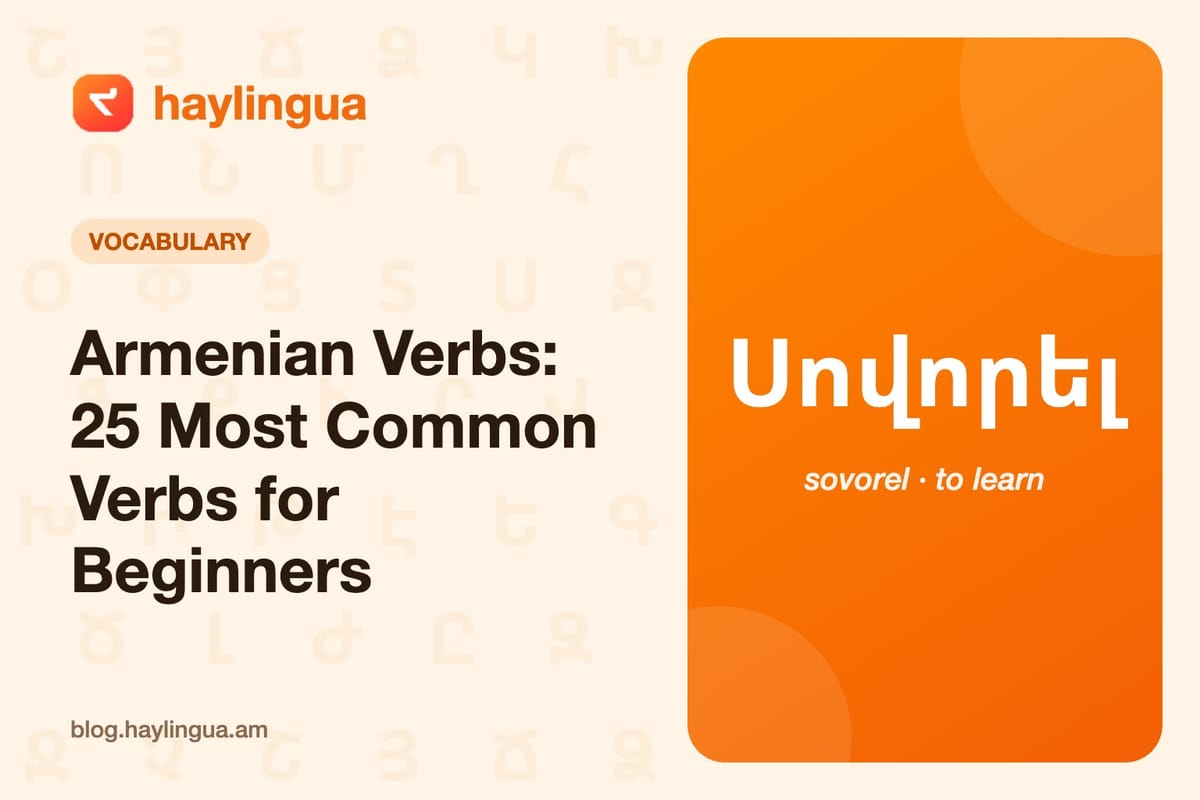
- սովորել (sovorel) – to learn, to study. Ես հայերեն եմ սովորում։ (yes hayeren em sovorum) – I am learning Armenian.
- կարդալ (kardal) – to read. Ես գիրք եմ կարդում։ (yes girk em kardum) – I am reading a book.
- գրել (grel) – to write. Նա նամակ է գրում։ (na namak e grum) – He is writing a letter.
How to learn these verbs
Learn five a day, always with the example sentence rather than as a bare word. Say each sentence out loud, then change one part, or make it negative: Ես ջուր չեմ ուզում։ (yes jur chem uzum) – I don't want water. In the evening, describe your day using as many of the verbs as you can.
Next steps
Once these feel comfortable, the past and future tenses build on the same infinitives. If you would like guided lessons that introduce verbs gradually you can find them on Haylingua.