Days of the Week in Armenian, Plus Months and Dates
Learn the days of the week in Armenian, the twelve months, how to say the date, and a handful of phrases you will use every week when making plans.

The days of the week in Armenian are some of the most useful words you can learn early on. You need them to book a lesson, arrange to meet a friend, check when a shop is open or understand when your landlord is coming round. They are also easier than they look, because most of them follow a simple pattern.
In this post you will find the days, the months, how to say the date, and a set of everyday phrases for talking about time.
The days of the week in Armenian
Here are all seven days. Note that in Armenian the days are written with a small letter, not a capital.
| Armenian | Transliteration | English |
|---|---|---|
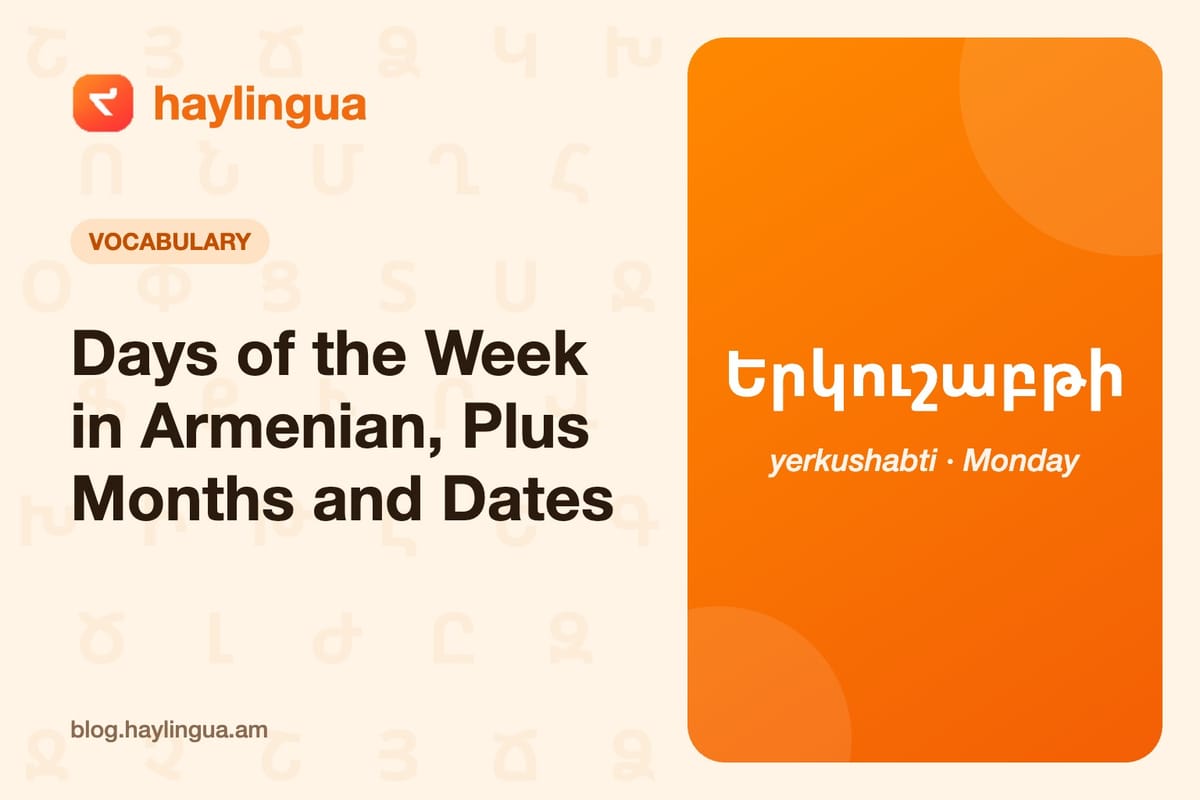
| երկուշաբթի | yerkushabti | Monday |
| երեքշաբթի | yerekshabti | Tuesday |
| չորեքշաբթի | chorekshabti | Wednesday |
| հինգշաբթի | hingshabti | Thursday |
| ուրբաթ | urbat | Friday |
| շաբաթ | shabat | Saturday |
| կիրակի | kiraki | Sunday |
The pattern behind the names
Monday to Thursday are counted from the Sabbath. Each one starts with a number:
- երկու (yerku) – two, so yerkushabti is the second day
- երեք (yerek) – three
- չորս (chors) – four, which becomes chorek in Wednesday
- հինգ (hing) – five
If you already know your numbers, you only need to remember the ending -shabti. Friday and Saturday are different. Urbat and shabat come from old Semitic words, and kiraki comes from the Greek word for "the Lord's day".
One more thing to watch: շաբաթ (shabat) means both Saturday and week. Context almost always makes it clear.
Useful words for talking about days
- օր (or) – day
- շաբաթ (shabat) – week
- ամիս (amis) – month
- տարի (tari) – year
- այսօր (aysor) – today
- վաղը (vaghə) – tomorrow
- երեկ (yerek) – yesterday
- ամեն օր (amen or) – every day
- շաբաթ-կիրակի (shabat-kiraki) – the weekend
Careful with yerek: as "yesterday" it is spelled երեկ, while the number three is երեք. They sound close, so listen for the context.
The months in Armenian
The months will feel familiar, since most of them are close to the English names. Like the days, they are written with a small letter.
- հունվար (hunvar) – January
- փետրվար (petrvar) – February
- մարտ (mart) – March
- ապրիլ (april) – April
- մայիս (mayis) – May
- հունիս (hunis) – June
- հուլիս (hulis) – July
- օգոստոս (ogostos) – August
- սեպտեմբեր (september) – September
- հոկտեմբեր (hoktember) – October
- նոյեմբեր (noyember) – November
- դեկտեմբեր (dektember) – December
How to say the date
Armenians say the month first, with the ending -i, and then the number. So 1 January is հունվարի մեկ (hunvari mek). When you say that something happens on a date, the number takes the ending -in.
- Այսօր ամսի քանի՞սն է։ (aysor amsi kanisn e?) – What is the date today?
- Այսօր մարտի ութն է։ (aysor marti utn e) – Today is 8 March.
- Ծնվել եմ մայիսի հինգին։ (tsnvel em mayisi hingin) – I was born on 5 May.
In writing, dates usually appear as numbers with the day first, for example 21.09 for 21 September, which is Independence Day in Armenia. Armenian Christmas falls on 6 January, հունվարի վեց (hunvari vets), so the first week of the year is a long holiday for many families.
Everyday phrases for making plans
- Այսօր ի՞նչ օր է։ (aysor inch or e?) – What day is it today?
- Այսօր երկուշաբթի է։ (aysor yerkushabti e) – Today is Monday.
- Վաղը շաբաթ է։ (vaghə shabat e) – Tomorrow is Saturday.
- կիրակի օրը (kiraki orə) – on Sunday
- կիրակի օրերին (kiraki orerin) – on Sundays
- այս շաբաթ (ays shabat) – this week
- հաջորդ շաբաթ (hajord shabat) – next week
- անցյալ շաբաթ (antsyal shabat) – last week
- հաջորդ տարի (hajord tari) – next year
With these you can already build short plans. Երկուշաբթի կհանդիպենք։ (yerkushabti khandipenk) – We will meet on Monday. And if a friend has a birthday, you can say Ծնունդդ շնորհավոր։ (tsnundd shnorhavor) – Happy birthday.
How to practise them
The quickest way to learn the days is to use them every morning. Say the day and date out loud in Armenian when you check your phone, or change your phone calendar to Armenian for a few weeks. Write your weekly plans in Armenian, even if it is just the day names and one word each. After a fortnight or so, the names stop being a list and start being part of how you think about the week.
Keep building from here
Days and months are a small set of words that you will use constantly, so they are worth getting right early. If you would like to learn them alongside numbers, telling the time and the rest of everyday Eastern Armenian in a structured way, have a look at the courses on Haylingua.