How to Say Thank You in Armenian (Plus Please and Sorry)
How to say thank you in Armenian, from shnorhakalutyun to the casual mersi, plus how to say please, you're welcome and sorry, with a short café dialogue.

Saying thank you is one of the first things worth learning in any language, and in Armenia it goes a long way. People notice when a foreigner or a visitor from the diaspora makes the effort, and a simple thanks in Armenian often earns you a smile and a longer chat.
This guide shows you how to say thank you in Armenian, from the formal word to the casual one you will hear on the street, plus how to say please, you're welcome and sorry. In the transliteration, ə stands for the short neutral vowel ը.
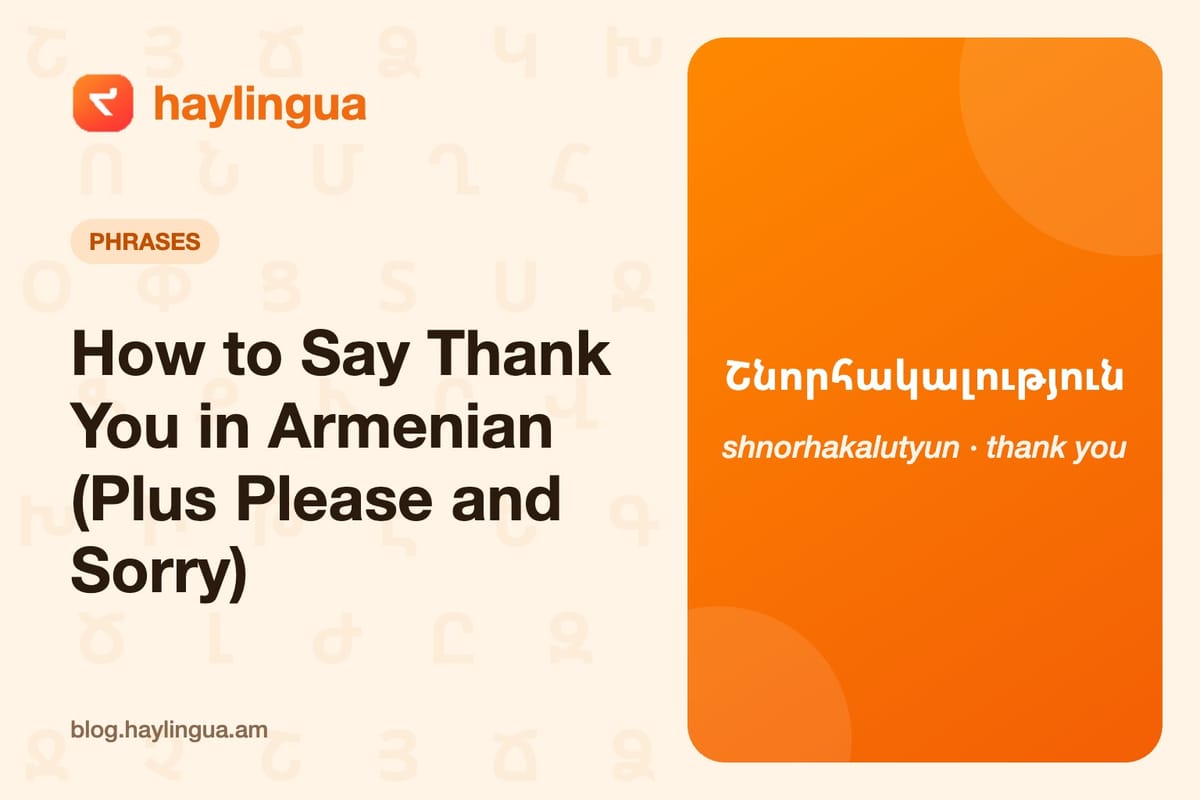
Thank you in Armenian: shnorhakalutyun
The standard way to say thank you is:
Շնորհակալություն (shnorhakalutyun) – thank you
It looks long, but it breaks down into easy pieces: shnor-ha-ka-lu-tyun. Put the stress on the last syllable, as with most Armenian words. The root շնորհ (shnorh) means grace or favour, and the whole word means something close to "gratitude".
Shnorhakalutyun works everywhere: in shops, with strangers, with your teacher, in emails and in formal situations. If you only learn one word from this post, make it this one.
Thank you very much
- Շատ շնորհակալ եմ (shat shnorhakal em) – thank you very much (literally "I am very grateful")
- Շնորհակալ եմ (shnorhakal em) – thank you, I'm grateful
- Շնորհակալ ենք (shnorhakal enk) – thank you, we're grateful
- Շատ շնորհակալություն (shat shnorhakalutyun) – many thanks
- Շնորհակալություն ամեն ինչի համար (shnorhakalutyun amen inchi hamar) – thank you for everything
- Շնորհակալություն օգնության համար (shnorhakalutyun ognutyan hamar) – thank you for the help
The word համար (hamar) means "for", and it comes after the thing you are thanking someone for.
Casual ways to say thanks
In everyday speech in Yerevan you will hear մերսի (mersi), borrowed from French, all the time. It is friendly and informal, perfectly fine with friends, in cafés and in shops. In a formal email or an official setting, stick with shnorhakalutyun.
- Մերսի (mersi) – thanks
- Շատ մերսի (shat mersi) – thanks a lot
- Մերսի, ջան (mersi, jan) – thanks, dear
Ջան (jan) is a warm word you can add after a name or after a thank you. Armenians use it constantly with friends and family.
Another word you will hear is ապրես (apres). Literally it means "may you live", and it is used as a warm "thanks" or "well done" to one person. When you speak to several people, or want to be polite, it becomes ապրեք (aprek).
How to say you're welcome
- Խնդրեմ (khndrem) – you're welcome
- Չարժե (charzhe) – don't mention it (literally "it's not worth it")
- Հաճույքով (hachuykov) – with pleasure
Khndrem is the one to learn first. You will hear it after almost every thank you, and it also means "here you are" when someone hands you something, like your change or your coffee.
How to say please
Խնդրում եմ (khndrum em) – please. It literally means "I ask", and it can go at the start or the end of a request:
- Մի սուրճ, խնդրում եմ (mi surch, khndrum em) – a coffee, please
- Հաշիվը, խնդրում եմ (hashivə, khndrum em) – the bill, please
- Խնդրում եմ, կրկնեք (khndrum em, krknek) – please repeat
- Կարո՞ղ եք օգնել (karogh ek ognel) – can you help?
Khndrum em can also be used as a reply to thanks, just like khndrem. The two come from the same verb, so it is easy to remember them as a pair.
How to say sorry
- Ներողություն (neroghutyun) – sorry, excuse me
- Կներես (kneres) – sorry (to one person you know well)
- Կներեք (knerek) – sorry, excuse me (polite, or to several people)
- Ցավում եմ (tsavum em) – I'm sorry (when hearing bad news)
Neroghutyun is the all-rounder. Use it to get past someone on a crowded bus, to get a waiter's attention or to apologise for a small mistake. Knerek does the same job and is just as common.
If someone apologises to you, the usual answers are:
- Ոչինչ (vochinch) – it's fine (literally "nothing")
- Խնդիր չկա (khndir chka) – no problem
Putting it together in a café
Here is a short exchange you could have in any café in Yerevan:
- You: Բարև ձեզ։ Մի սուրճ, խնդրում եմ։ (barev dzez. mi surch, khndrum em.) – Hello. A coffee, please.
- Waiter: Խնդրեմ։ (khndrem.) – Here you are.
- You: Շնորհակալություն։ (shnorhakalutyun.) – Thank you.
- Waiter: Խնդրեմ։ (khndrem.) – You're welcome.
- You, later: Կներեք, հաշիվը, խնդրում եմ։ (knerek, hashivə, khndrum em.) – Excuse me, the bill, please.
A few notes on politeness
Armenian has an informal and a polite "you", and the same split shows up in these phrases. With strangers, older people and in shops, use the polite forms such as knerek and aprek. With friends and people your own age, the informal ones are fine.
Hospitality is taken seriously in Armenia, and if you are invited to someone's home, thanking the host for the food matters. A simple Շատ համեղ էր (shat hamegh er) – it was very tasty, followed by shnorhakalutyun, will be appreciated.
And don't worry about getting the pronunciation perfect. A slightly clumsy thank you in Armenian still lands far better than a perfect one in English.
If you would like to hear these words spoken and practise them in real situations, Haylingua has short lessons on everyday Eastern Armenian, from greetings and polite phrases up to confident conversation.