How to Say Hello in Armenian (and Reply Like a Local)
Barev is the everyday way to say hello in Armenian, but there is more to it. Learn polite and casual greetings, good morning and good evening, how to ask how someone is, and how to say goodbye.

Knowing how to say hello in Armenian is the easiest way to make a good first impression in a Yerevan café, at a family gathering or on a video call with relatives. The basic word is short and simple, but there are a few variations worth knowing, depending on who you are talking to and what time of day it is. Here are the greetings people really use in Armenia, with a few replies and goodbyes so you can keep the conversation going.
Barev: the everyday way to say hello in Armenian
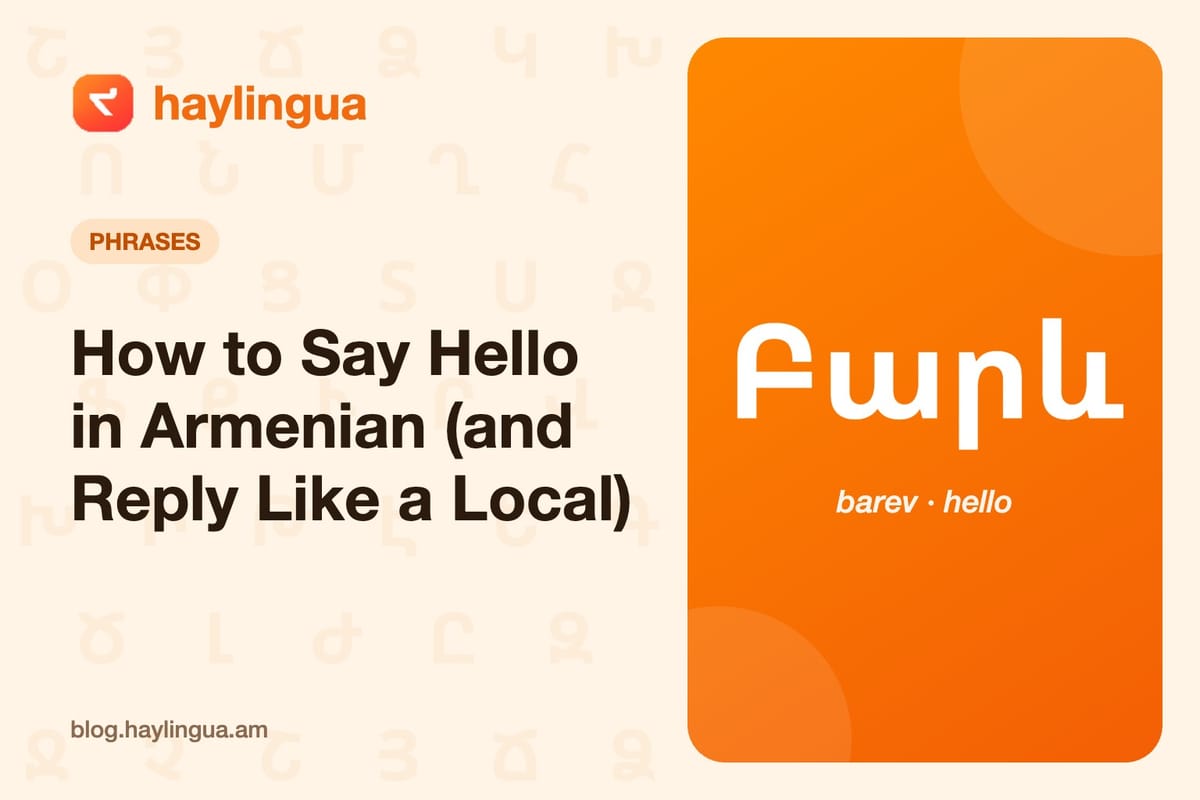
Բարև (barev) – hello. This is the word you will hear most. It works with friends, shopkeepers, neighbours and taxi drivers, and it is never wrong. The stress falls on the last syllable: ba-REV.
Armenians often add a name and the word ջան (jan), a warm word that means something like "dear". So you might hear Բարև, Արամ ջան (barev, Aram jan). You can use jan with friends and people you know well, and it sounds friendly rather than romantic.
The polite version: barev dzez
Բարև ձեզ (barev dzez) – hello (polite, or to several people). The word ձեզ (dzez) is the polite and plural form of "you". Use it with older people, officials, teachers, a doctor, or anyone you have just met in a formal setting. It is also the standard way to begin an email or a message to someone you don't know well.
If you are not sure which to use, barev dzez is the safer choice. Nobody is offended by politeness, and people will switch to the informal style if they want to.
A friendly alternative: voghjuyn
Ողջույն (voghjuyn) – hi, greetings. This is another common greeting. You will see it often in messages and hear it among friends. The gh sound is made at the back of the throat, a bit like a French r.
Greetings by time of day
Armenian has a set of greetings built with բարի (bari), which means "good":
- Բարի լույս (bari luys) – good morning (literally "good light")
- Բարի օր (bari or) – good day
- Բարի երեկո (bari yereko) – good evening
- Բարի գիշեր (bari gisher) – good night
Bari luys is by far the most common of these, and the usual reply is simply to say it back. Bari gisher is used when leaving in the evening or going to bed, not as a greeting when you arrive.
Asking how someone is
After hello usually comes "how are you?". Again, there is an informal and a polite form:
- Ինչպե՞ս ես (inchpes es) – how are you? (informal)
- Ինչպե՞ս եք (inchpes ek) – how are you? (polite or plural)
- Ո՞նց ես (vonts es) – how are you? (casual, very common in speech)
- Ի՞նչ կա (inch ka) – what's up? what's new?
The little mark over the vowel is the Armenian question mark. It sits over the stressed vowel of the word being asked about, not at the end of the sentence.
Some easy replies:
- Լավ եմ, շնորհակալություն (lav em, shnorhakalutyun) – I'm fine, thank you
- Վատ չեմ (vat chem) – not bad
- Ոչինչ (vochinch) – nothing much (as a reply to "what's new?")
A short example
- Բարև, Անի ջան։ Ինչպե՞ս ես։ (barev, Ani jan. inchpes es?) – Hi Ani, how are you?
- Լավ եմ, շնորհակալություն։ Դու ինչպե՞ս ես։ (lav em, shnorhakalutyun. du inchpes es?) – I'm fine, thanks. How are you?
- Վատ չեմ։ (vat chem.) – Not bad.
Notice the Armenian full stop, ։, which looks like a colon. It ends statements and questions alike, because the question is already marked on the word itself.
Meeting someone new
- Ուրախ եմ ծանոթանալու համար (urakh em tsanotanalu hamar) – nice to meet you
- Բարի գալուստ (bari galust) – welcome
When you visit someone's home, you will almost certainly hear bari galust at the door, usually followed by an offer of coffee.
Saying goodbye
- Ցտեսություն (tstesutyun) – goodbye (neutral, fine in any situation)
- Հաջող (hajogh) – bye (casual)
- Առայժմ (arayzhm) – bye for now, see you
- Մինչ հանդիպում (minch handipum) – see you, until we meet
- Բարի ճանապարհ (bari chanaparh) – have a good trip
A few cultural notes
Men usually shake hands when they meet, and friends and family often greet each other with a kiss on the cheek. On the phone, most people answer with Ալո (alo) or Լսում եմ (lsum em), which literally means "I'm listening". And when you walk into a small shop or a lift, a quick barev dzez is normal and appreciated.
Above all, don't worry about getting it perfect. Any attempt to say hello in Armenian usually gets a smile and a much warmer conversation than English would.
If you want to go beyond hello, Haylingua teaches Eastern Armenian from the first greeting to real conversations, one short lesson at a time.