Armenian Pronouns: Personal and Possessive Pronouns Explained
A clear guide to Armenian pronouns: yes, du, na, menk, duk and nrank, when to use the polite duk, object forms like indz and kez, and possessives like im, ko and the endings -s and -d.

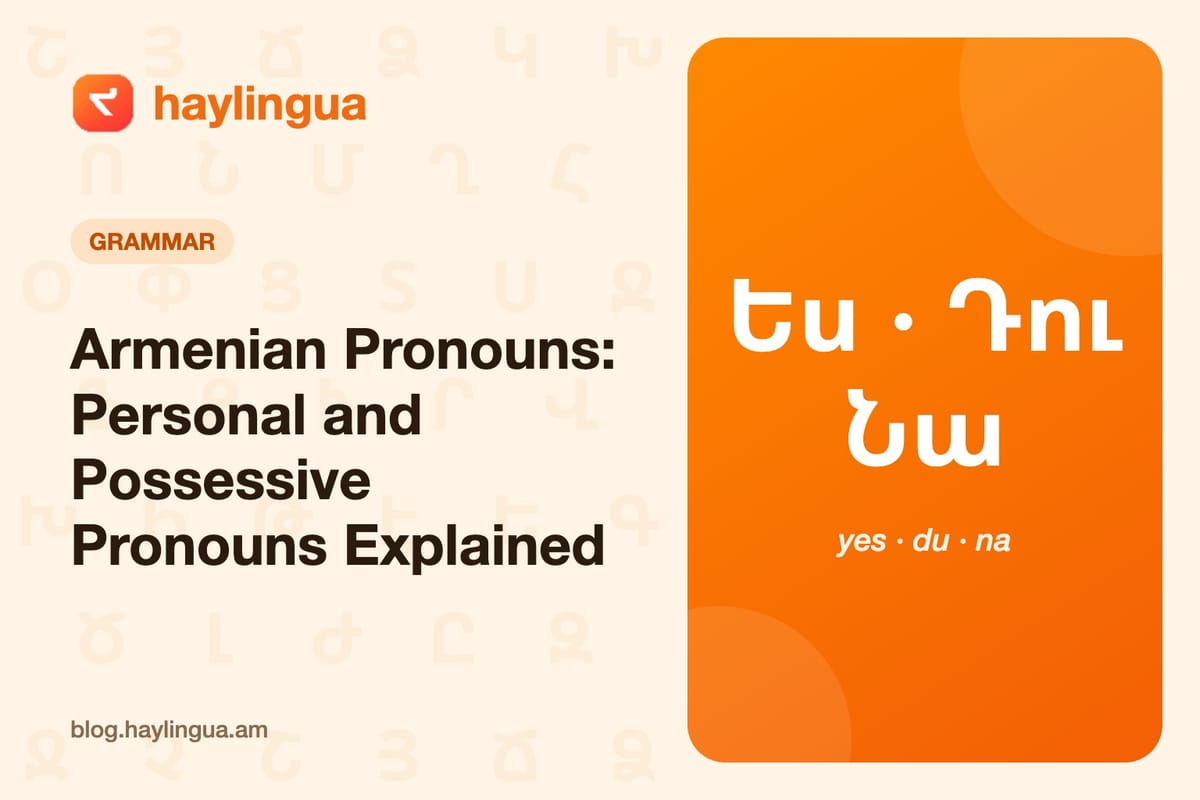
Pronouns are small words, but you use them in almost every sentence. Armenian pronouns are fairly easy to learn: there are only six personal pronouns, there is no separate word for "he" and "she", and the forms follow clear patterns. Once you have them, a lot of basic grammar starts to click.
This post covers the personal pronouns, the polite "you", object forms like "me" and "you", and the possessives "my", "your" and so on. In the transliteration, ə stands for the short neutral vowel ը.
Armenian personal pronouns
- ես (yes) – I
- դու (du) – you (one person, informal)
- նա (na) – he, she, it
- մենք (menk) – we
- դուք (duk) – you (several people, or polite)
- նրանք (nrank) – they
Armenian has no grammatical gender, so նա covers he, she and it. Context tells you who is meant. In everyday speech you will also hear ինքը (inkə) for "he" or "she" and իրենք (irenk) for "they".
Pronouns with the verb "to be"
The easiest way to learn the pronouns is together with the verb "to be", because you will use them as a pair all the time:
- ես եմ (yes em) – I am
- դու ես (du es) – you are
- նա է (na e) – he/she is
- մենք ենք (menk enk) – we are
- դուք եք (duk ek) – you are
- նրանք են (nrank en) – they are
Careful with the first one: the pronoun ես (yes) means "I", while the verb ես (es) means "you are". They are spelled the same but pronounced differently, and the position in the sentence always makes it clear.
For example, Ես ուսանող եմ (yes usanogh em) – I'm a student, and Նրանք ընկերներ են (nrank ənkerner en) – they are friends.
Because the verb ending already shows the person, Armenians often drop the pronoun. Ուսանող եմ (usanogh em) on its own also means "I'm a student". You keep the pronoun when you want to stress it or contrast people.
The polite "you": duk
Like French or Russian, Armenian uses the plural դուք (duk) to speak politely to one person. Use it with strangers, older people, teachers, officials and in shops. With friends, family and people your own age, դու (du) is normal, and younger Armenians switch to it quickly.
The verb follows the pronoun, so polite questions use the plural form:
- Որտեղի՞ց ես (vorteghits es) – where are you from? (informal)
- Որտեղի՞ց եք (vorteghits ek) – where are you from? (polite)
You already know one polite form if you know Բարև ձեզ (barev dzez) – hello. The ձեզ there is the polite "you". In formal letters and emails you will often see these pronouns written with a capital letter, as Դուք, Ձեզ and Ձեր, as a sign of respect.
Object and possessive forms
Each pronoun has a form for "me, you, him" and a form for "my, your, his". Here they are side by side.
| Subject | Object (me, you...) | Possessive (my, your...) |
|---|---|---|
| ես (yes) – I | ինձ (indz) | իմ (im) |
| դու (du) – you | քեզ (kez) | քո (ko) |
| նա (na) – he, she | նրան (nran) | նրա (nra) |
| մենք (menk) – we | մեզ (mez) | մեր (mer) |
| դուք (duk) – you | ձեզ (dzez) | ձեր (dzer) |
| նրանք (nrank) – they | նրանց (nrants) | նրանց (nrants) |
Object forms in use
- Ես քեզ սիրում եմ (yes kez sirum em) – I love you
- Զանգիր ինձ (zangir indz) – call me
- Նրան ճանաչում եմ (nran chanachum em) – I know him/her
- Ինձ համար (indz hamar) – for me
- Ինձ դուր է գալիս (indz dur e galis) – I like it
The last one is worth a second look. Armenian says "to me it is pleasing" rather than "I like", which is why it starts with ինձ and not ես.
Possessive pronouns
The possessive goes before the noun, and the noun normally takes the definite article -ը (-ə):
- իմ տունը (im tunə) – my house
- քո ընկերը (ko ənkerə) – your friend
- ձեր անունը (dzer anunə) – your name (polite)
The short endings -s and -d
For "my" and "your" (informal), Armenian often uses an ending instead of a separate word. Add -ս (-s) for "my" and -դ (-d) for "your":
- տունս (tuns) – my house
- տունդ (tund) – your house
- մայրս (mayrs) – my mother
- անունդ (anund) – your name
So իմ տունը and տունս mean the same thing. The ending is shorter and very common in speech, for example in Անունդ ի՞նչ է (anund inch e) – what's your name?
His own, her own: ir
Armenian also has իր (ir), meaning "his own" or "her own", and իրենց (irents), "their own". Use it when the owner is the subject of the sentence: Նա սիրում է իր աշխատանքը (na sirum e ir ashkhatankə) – he loves his work, meaning his own work.
Common mistakes to avoid
- Forgetting to use duk with older people or strangers. It is a small thing, but people notice.
- Mixing up քեզ (kez), "you" as an object, with քո (ko), "your".
- Leaving out the article after a possessive. Say im tunə, not im tun.
Armenian pronouns come up in every lesson after this one, so it pays to get comfortable with them early. On Haylingua you can practise them in context, with audio and short exercises, as part of a structured Eastern Armenian course.